

Introduction
The Pega Cloud Summit 2026 kicked off its external sessions on Day 4 (Thursday, 12 February) with a compelling Client Lens keynote, bringing together John Higgins, Chief of Clients and Partners Success, and Scott Merritt, Blueprint Delivery Leader. Together, they set the strategic tone for the entire event — exploring how Blueprint is fundamentally changing the way enterprise software is designed, delivered, and evolved.
Whether you were there live or are catching up now, this post captures the key insights and ideas from that session. You can watch the full recording here: Pega Cloud Summit 2026: From Blueprint to Go-Live.
Tech Debt Is the Real Barrier to AI — And Blueprint Is the Answer
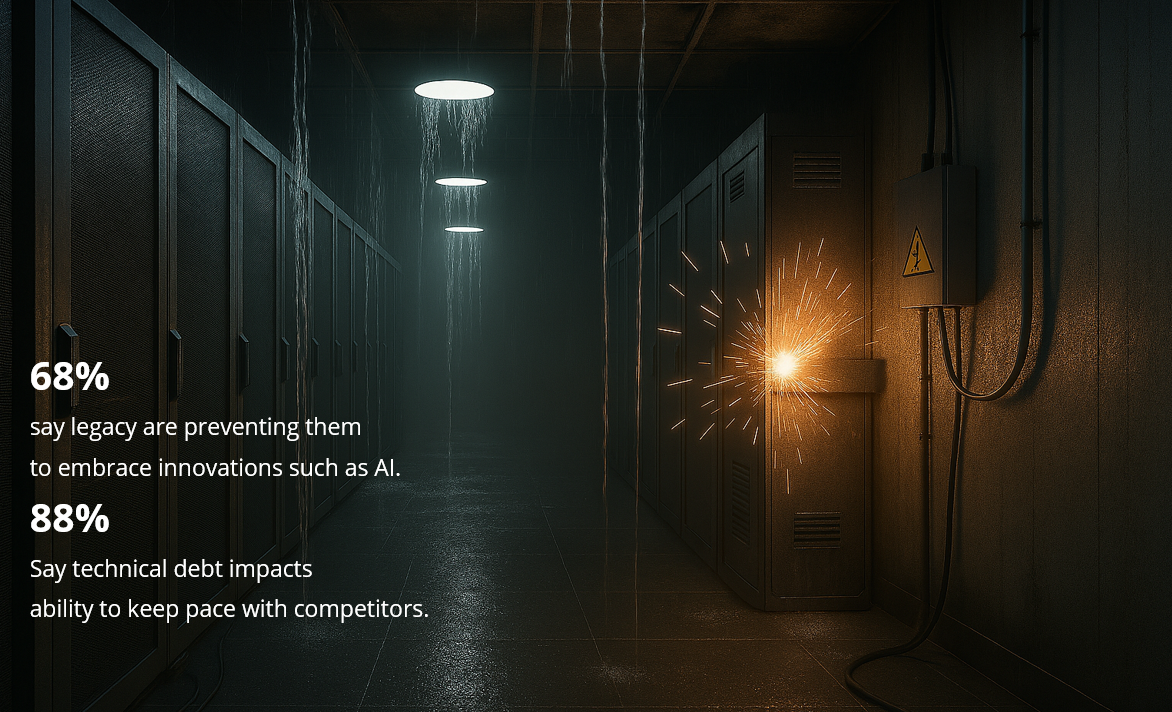
John Higgins opened with a candid reflection on the state of enterprise software. Drawing on his 30-plus years in the industry — including a memorable story about a VAX system he tried to retire in 1998 that is still running today — he made the case that legacy tech debt remains the single greatest obstacle to AI-driven innovation.
"Everybody who's selling you fast and innovation — the first thing you need to do if you want to run a marathon: sort out your diet. Take the bad calories out of the system."
For John, Blueprint is the tool that enables this at scale. It is no longer just a sales accelerator; it has evolved into a delivery platform capable of:
- Redesigning and replacing undocumented legacy applications — by ingesting APIs, user manuals, screen recordings, and code analysis, Blueprint surfaces what an application does today and helps teams envision what it should do tomorrow.
- Large-scale portfolio rationalization — organisations with thousands of enterprise apps can use Blueprint to catalogue, prioritise, and consolidate, with some clients already working to reduce portfolios by hundreds of applications.
- Enabling self-sufficiency at the executive level — chief execs, heads of loans, and heads of fraud are using Blueprint directly, collaborating with subject-matter experts to design workflows without needing deep Pega expertise.
John also made a pointed observation about the AI marketplace: approaches that layer new technology on top of existing data silos — what he called "wrap and renew" — are repeating the mistakes of the past. The right approach is to use AI at design time to reason through every possible business process path, then execute it predictably and govern it at runtime.
Blueprint Delivered: A New Methodology for the GenAI Era

Scott Merritt took the session deeper, introducing Blueprint Delivered — Pega's new, prescriptive end-to-end delivery framework that replaces Pega Express.
The core insight is simple but powerful: technology alone is not enough. To unlock the full value of Blueprint, organizations must also rethink their process — challenging every artefact of traditional SDLC, from user stories to sprint ceremonies. Scott framed this using the concept of process capability: to shift the mean of delivery timelines (from months to weeks), you need a simultaneous revolution in technology, process redesign, and measurement.
Key highlights from Scott's presentation:
- User stories are no longer the starting point. Blueprint generates a high-fidelity application design that, once imported into Infinity, delivers approximately 40% of the application build before a single user story is written.
- Teams are getting smaller and faster. Clients leveraging the full Blueprint Delivered methodology are delivering MLPs in 90 days or less, with teams of 3–4 people replacing traditional Scrum teams of 15–20.
- The playbook is available now. Blueprint Delivered is documented on PegaDocs and the Pega Community, with a step-by-step, subway-map-style guide covering blueprinting, authoring, and value activation.
- Regional workshops and on-site engagements are underway across 2026 to help clients and partners embed this methodology in their organisations.
A new Blueprint Estimator now gives clients a rough order-of-magnitude sizing for build effort directly from a completed Blueprint, and CI/CD pipelines are pre-configured at import time — removing yet another manual step from the delivery process.
The Numbers Speak for Themselves
John closed his section with concrete social proof:
- A large US state agency converted 1 million lines of COBOL into a working prototype in two weeks.
- Accenture and Allianz migrated an underwriting app from a homegrown system to cloud.
- Vodafone demonstrated a go-live within 40 hours at PegaWorld.
- T-Systems consolidated 800 HR workflows using Blueprint.
- 80% of clients using Blueprint to go live complete their first MLP within 90 days.
Q&A Highlights
The session concluded with two audience questions worth noting:
How can Blueprint help align to strategic outcomes and portfolio investment?
Both John and Scott emphasized a digital factory mindset: building a library of blueprints that maps to the modernization backlog, aligns work to strategic outcomes, and enables a consistent, repeatable approach across the enterprise. John's key message: focus on the work to be done, not the screen that surfaces it — separate the workflow from the channel, and build for change from day one.
How do you convince customers with their own AI practices to adopt Blueprint?
John's answer was unequivocal: don't convince them — inspire them. Show the product. Ask them to think of the project that broke their spirit, or the thing they urgently need to get done, and let Blueprint speak for itself. "This is not a sell. What we're doing is revolutionizing how the world builds software."
Post-Summit reflections
As the summit wrapped up, we invited a few reflections from leaders who led the sessions. To open this section, John Higgins and Scott Merritt offer their perspectives on what stood out most — from the level of practitioner engagement to the importance of pairing GenAI innovation with real change in skills, confidence, and ways of working.
“What a terrific summit - particularly enjoyed how engaged everyone was and how each session transcended the product innovations and opened up the skills and confidence needed to properly embrace AI-powered delivery. After all, real transformation only sticks when the people with their hands on the keyboards believe in the tools - this summit proved that practitioners aren’t just adopting the change — they’re leading it from the front - well done Ivan and all involved!” – John Higgins.
“What stood out to me at this Summit wasn’t just the technology — it was the forum itself. We’re clearly in the middle of a GenAI revolution, but moments like this remind me that it only matters if it’s matched by a people‑and‑process revolution. The level of engagement, the questions, and the shared curiosity showed that this isn’t something any one group delivers alone. Software providers, consultants, partners, and clients — all of us showing up together — that’s how we turn this moment into real, lasting change.” — Scott Merritt
Join the Conversation
If this session sparked ideas or questions for you, we'd love to continue the discussion. Join the Pega-as-a-Service Expert Circle — our community hub for monthly webinars, peer knowledge-sharing, and direct access to Pega's cloud and delivery experts: Pega-as-a-Service Expert Circle.
The Q&A conversation from this session is also open — post your follow-up questions there, and our team will respond. Additional questions that weren't answered live will be picked up in upcoming Expert Circle webinars.
See you in the circle!
