Conversation

Pegasystems Inc.
US
Last activity: 4 Dec 2025 11:35 EST
Leveraging Prompt Engineering to Accelerate Pega Blueprint
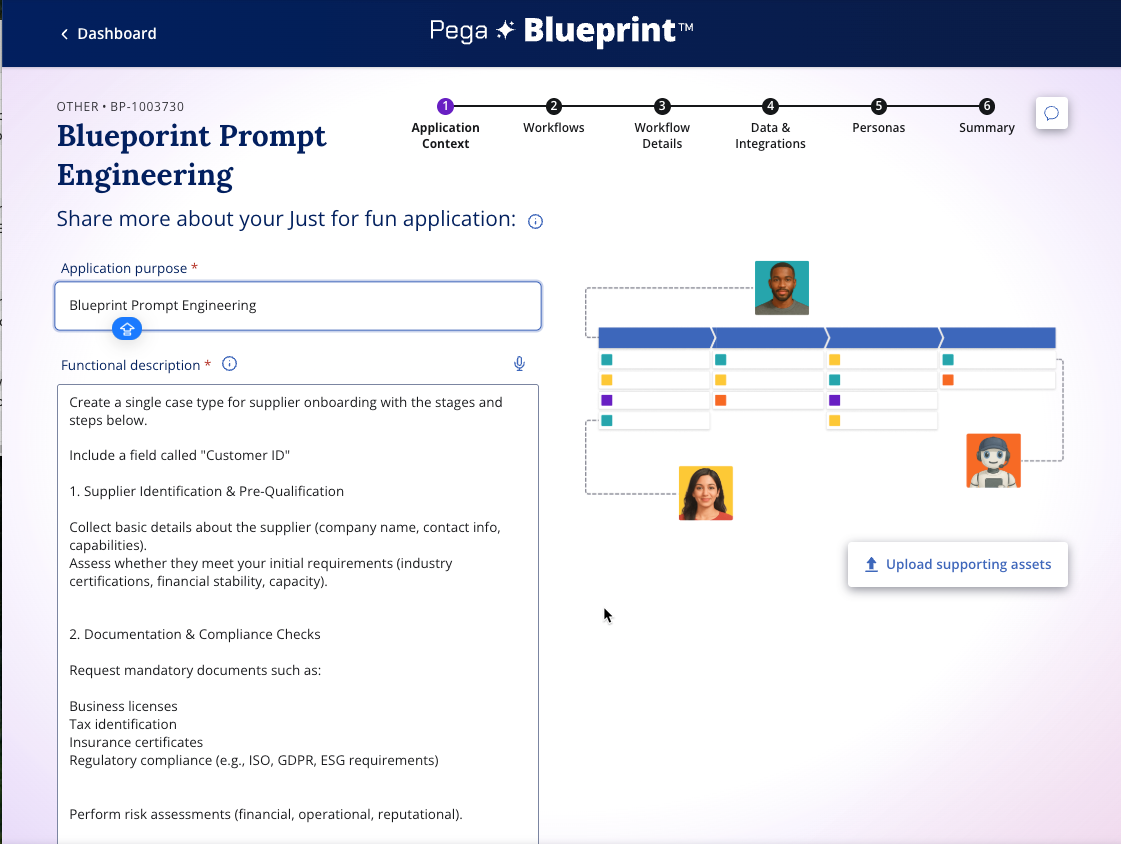
Pega Blueprint transforms requirements gathering into a collaborative, AI-driven experience, enabling enterprises to co-design and launch robust applications with unprecedented speed and alignment. One of the methods Blueprint uses to generate custom workflows is a user prompt that describes what the app will do. A prompt is the instructions or input you give to an AI system to generate a response. Think of it as the question or command that sets the stage for what the AI will produce. From this prompt, Blueprint interprets your intent and uses generative AI to translate your prompt into Pega concepts like case types, stages, data objects, personas, and integrations.
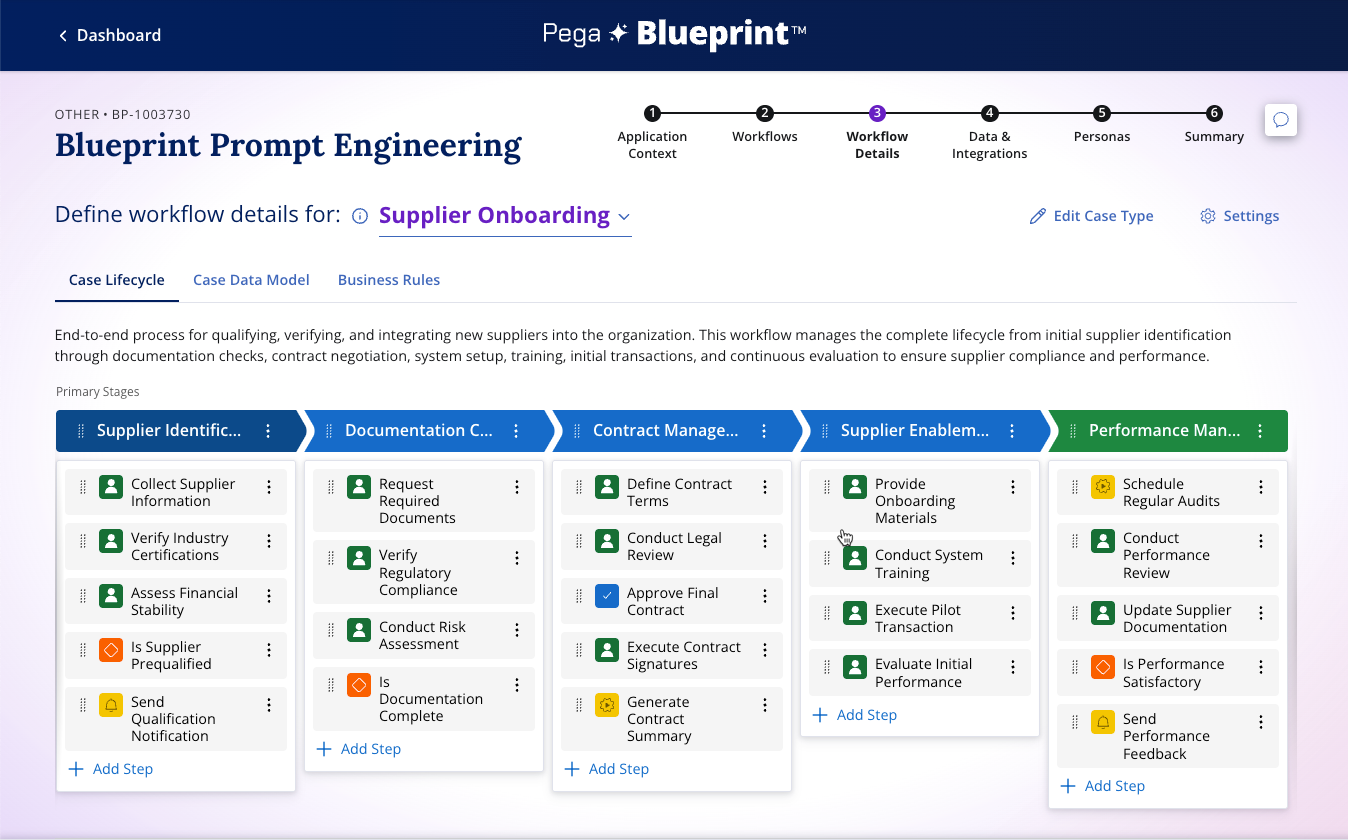
Prompt Engineering is the practice of designing and refining inputs (called prompts) for AI systems to achieve the most accurate, relevant, and useful outputs. It involves understanding how the AI interprets language and structuring instructions to guide its behavior effectively. Organizations may even have specialized roles that only focus on Prompt Engineering. Here are some best practices when designing a prompt:
- AI doesn’t “think” like humans; it interprets patterns. Clear, structured prompts bridge the gap between business intent and AI output.
- Prompt Engineering is about precision, context, and iteration. It is not a one and done exercise.
- Show sample inputs and outputs to guide the model.
- Define length, format, or style to avoid vague results.
- Add background information or relevant details for better relevance.
- Use precise language and avoid open-ended phrasing unless intended.
- Assign roles like “Act as a project manager” for clarity.
- Separate instructions, examples, and data with quotes or markers.
To help create a more detailed prompt, I like to use AI tools like Microsoft Co-Pilot and Google Gemini. It helps the ideation process and the output is in a structured format that Blueprint can easily understand.
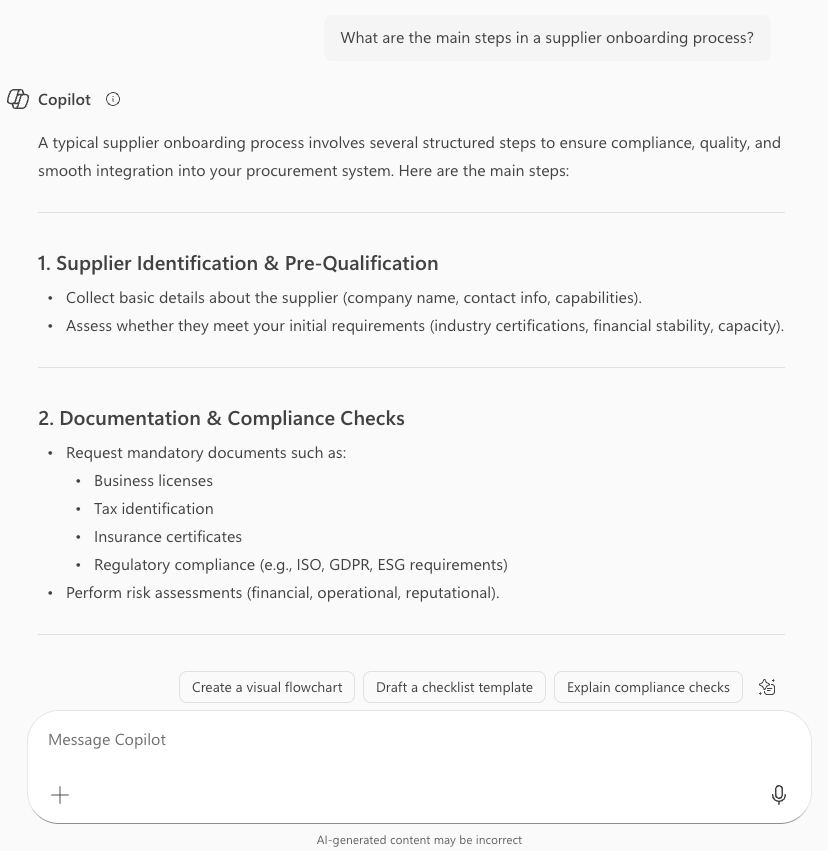
I could just copy and paste the results directly into the Blueprint prompt however, this is the perfect time to refine the prompt to make it unique to your business needs. Blueprint can also understand detailed instructions, for example:
- Create a single case type with the following stages...
- The Data Model must include a field called "CustomerID" of type String
- Translate the results into French
Better prompts lead to faster design cycles, fewer revisions, and more accurate Blueprints aligned with business goals. Prompt Engineering is meant to be an iterative process. If you are not happy with the results you can always go back to the Blueprint and modify your description.
Pro Tip: If you have a prompt you are happy with, but still want to experiment, Blueprint allows you to create versions and copies of existing Blueprints. This way you do not overwrite your gold copy by mistake.